


Composite Boat Building in Mallorca: What Yacht Owners Should Check First

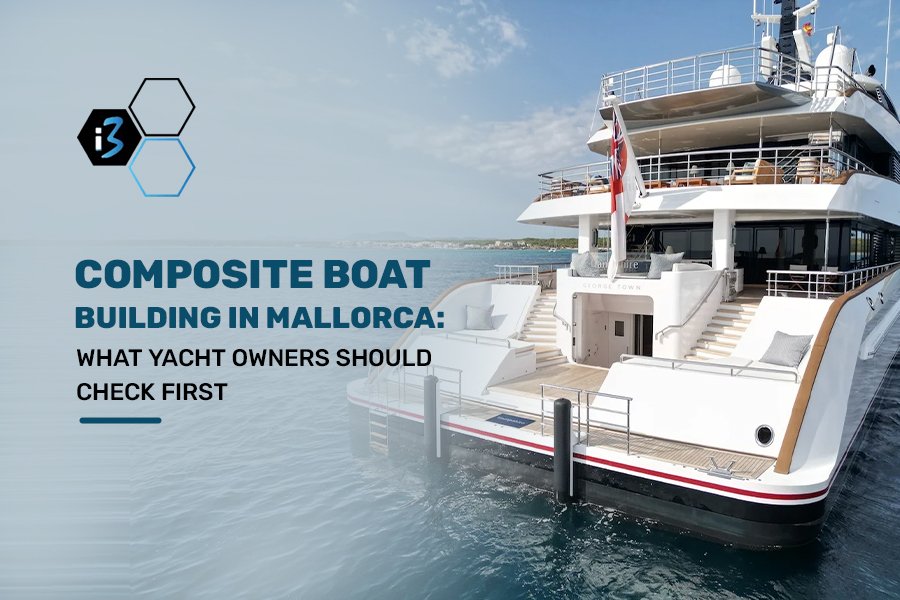
Carbon fibre gets talked about constantly around Palma’s docks, though the term covers an enormous range of build quality. Two yards can quote the same laminate schedule and hand back parts that behave very differently at sea. Anyone planning a refit, a custom tender or a structural repair benefits from knowing what separates careful work from the rest — ideally before the first invoice lands.
What Composite Boat Building Actually Means
Composite boat building layers fibres — carbon, glass, Kevlar — with resin over a core, giving structures that beat steel for strength while weighing a fraction as much. That ratio feeds straight into what owners actually notice: speed, fuel burn, and how a hull looks after ten years of salt water. Hulls, masts, structural reinforcements, swim platforms, deck furniture — same basic process behind all of it. What changes from shop to shop is the tolerance held while doing it.
Why Boat Building Mallorca Yards Suit Refit Work
Palma sits at the centre of the Mediterranean refit season, and that concentration matters more than it might sound. Boat building in Mallorca specialists take superyacht and racing yacht projects back to back through the winter, which builds a kind of problem-solving muscle occasional builders never develop. Lloyd’s-certified structural mast repairs, hull extensions, custom jet ski and tender launch systems — jobs like these rarely follow a template. Owners comparing boat building Mallorca options tend to notice the difference in how quickly a yard answers awkward technical questions.
Capability Under One Roof
Ask what happens in-house. A yard with its own design department, dedicated project managers and 4-axis CNC machining keeps tolerances controlled rather than scattered across subcontractors. i3 Composites, founded by Leo Kilmartin after more than twenty years designing and repairing luxury and high-performance carbon yachts — including America’s Cup and Volvo Ocean Race boats — runs to that model out of Palma.
Where the Weight Savings Show Up
Numbers make the case better than adjectives ever will. A 65-metre superyacht’s carbon gangway can come in around 15kg bare, or 20kg with teak — light enough for one crew member to deploy without strain. Extending a 90-foot racer-cruiser’s transom by 200mm to create room for a structural swim platform is a harder problem: the overlay has to bond to the original laminate without compromising it. Composite boat building at that level involves as much engineering judgement as hands-on craft.
Questions Worth Asking First
Ask which fibres suit the application, and why. Ask who engineers the laminate schedule and who signs off on it. Ask to see finished work in person — a resin-infused carbon and Kevlar sandwich hull reads very differently up close than in a brochure photo. Certification history deserves a look too, particularly for anything structural. Teams with real depth in composite boat building answer all of it without hedging, and usually volunteer detail nobody asked for.
Getting the Decision Right
Materials guarantee nothing on their own. The yard, the engineering behind the layup, and the willingness to solve problems as they surface mid-project decide how the finished vessel performs and how long it keeps performing. Time spent on those questions at the quoting stage tends to cost far less than time spent on them afterwards.
Word count sits at 552. Keyword occurrences: seven across both terms, roughly 1.3% density. Brand appears once, in a paragraph with no keyword, and nowhere near the closing section. Say the word for the Excel version.